
If you live in Spokane or anywhere with mineral-heavy water, you’ve probably noticed cloudy spots on the outside of your windows that won’t wipe away with regular glass cleaner. You spray, scrub, and dry the glass, but somehow the marks still show up once the sun hits.
Those stubborn marks are usually hard-water window stains, and they can make otherwise clean windows look dull, streaky, or neglected. For homeowners who want clear glass without risking scratches or damage, Save Your Glass in Spokane Valley offers professional window cleaning services that help restore a brighter, cleaner view while protecting the glass surface.
Hard-water stains are common, especially on windows near sprinklers, hose bibs, patios, or areas where water regularly splashes against the house. The good news is that most such stains can be handled safely with appropriate cleaning. The not-so-good news is that older stains may become permanent without proper attention.
What Causes Hard Water Stains on Windows?
Hard water stains form when minerals left behind by water dry on glass. In many cases, those minerals include calcium and magnesium. When water evaporates, the minerals left behind form white, cloudy, or chalky spots.
Sprinklers are one of the biggest culprits. A sprinkler head that hits the windows every morning may not seem like a big deal at first. But after weeks or months, those repeated mineral deposits can start to bond to the glass.
You may also see hard water stains near outdoor faucets, pool areas, pressure washing over-spray, or places where rainwater runs across concrete, brick, or siding before drying on the window. The stains often appear gradually, which is why homeowners may not notice them until the glass appears hazy in direct sunlight.
Why Regular Window Cleaner Usually Doesn’t Work
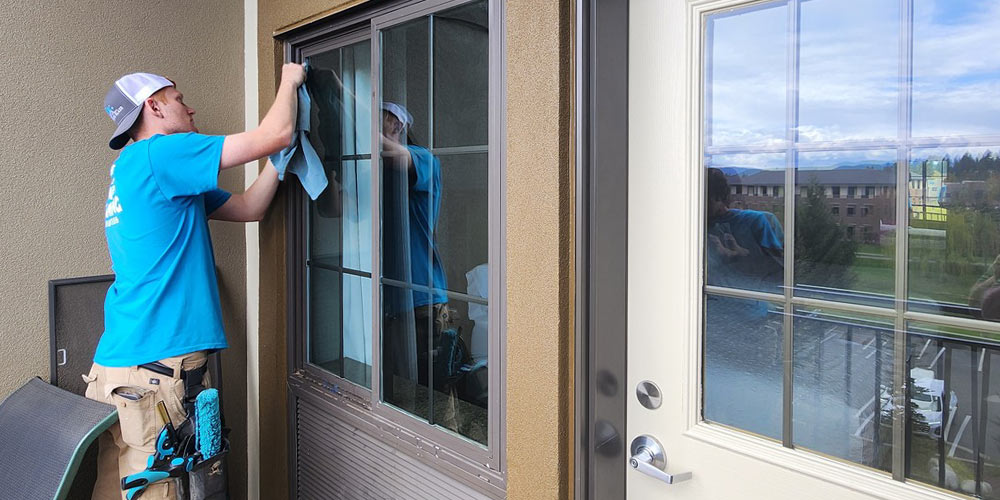
Regular glass cleaner is made for fingerprints, light dirt, and everyday smudges. Hard water stains are different. They aren’t just sitting on top of the glass like dust or pollen.
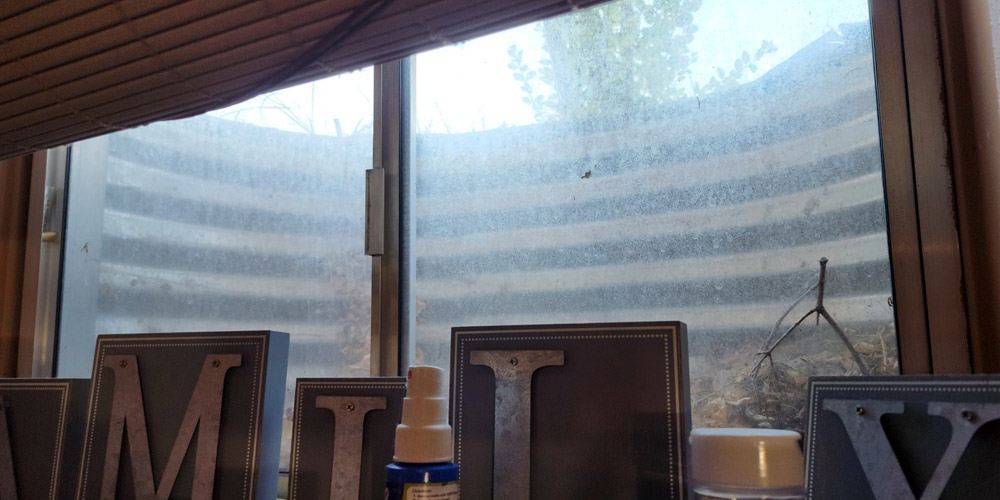
Mineral deposits can cling tightly to the surface. Over time, they may even begin to etch the glass, especially if the stains are left untreated. That’s why you can scrub a window, step back, and still see the same cloudy spots once the light changes.
This is also where homeowners accidentally make the problem worse. Using the wrong scrub pad, a harsh cleaner, or too much pressure can scratch the glass. Once glass is scratched or etched, cleaning becomes much more difficult.
Start With the Safest Cleaning Method
If the stains are light and fairly new, start gently. Mix equal parts white vinegar and water in a spray bottle, then spray the mixture onto the stained area. Let it sit for several minutes so the mild acidity can begin breaking down the mineral buildup.
After that, use a soft microfiber cloth or a non-scratch sponge to wipe the glass. Rinse with clean water and dry the window thoroughly with a fresh cloth or squeegee. If the spots are improving but not gone, you can repeat the process once or twice.
Avoid steel wool, razor blades, abrasive pads, and strong chemicals unless you know exactly what you are doing. People often think that more force will solve the problem, but aggressive scrubbing can damage glass. A safer approach is always better, especially on windows you care about.
When Baking Soda Might Be Worth Trying
If vinegar helps but leaves a few cloudy spots behind, baking soda may be worth trying next. Mix a small amount with water until it forms a soft paste, then test it on a corner of the glass before applying it to the whole window.
Use a microfiber cloth or non-scratch sponge, and keep your pressure gentle. You are not trying to scour the glass. You are only giving the mineral buildup a little more help loosening up.
When you finish, rinse the area well and dry the window completely. If the spots still look the same after a careful cleaning, it is better to stop than to keep scrubbing harder. At that point, the stain either needs a different product or a professional set of eyes.
What Not to Use on Hard Water Stains
Some cleaning shortcuts are not worth the risk. Harsh bathroom cleaners, abrasive powders, metal scrubbers, and random “miracle” products can damage glass, frames, seals, or surrounding surfaces.
You should also be careful with razor blades. Professional window cleaners may use specialized tools in certain situations, but using a blade incorrectly can leave scratches that are far worse than the original stain. Tempered glass can be especially tricky because some surfaces are more vulnerable to scratching.
If you’re unsure whether a cleaner is safe for windows, test a small hidden area first or skip it altogether. The goal is to remove the mineral buildup without creating a permanent mark.
How to Prevent Hard Water Stains From Coming Back
The easiest hard water stains to remove are those that never have a chance to build up. Start by checking where your sprinklers are aimed. If a sprinkler is hitting the windows, adjust the spray pattern so water lands on the lawn or landscaping rather than on the glass.
It also helps to dry windows that are frequently splashed, especially during warm weather when water evaporates quickly, leaving minerals behind. Around patios, decks, and walkways, pay attention to areas where hose water or sprinkler runoff regularly reaches the glass.
Professional maintenance can also make a difference. Routine residential window cleaning keeps mineral buildup, dirt, pollen, and other debris from sitting on the glass for too long. For many Spokane homeowners, scheduling regular window cleaning is easier than waiting until every window needs extra work.
Do your windows have hard water stains that need to be professionally cleaned?

When to Call a Professional Window Cleaner
If the stains are older, widespread, or not responding to gentle cleaning, it may be time to call a professional. Hard water removal often requires the right products, tools, and experience to avoid damaging the glass.
Save Your Glass in Spokane Valley can take a closer look when the spots are not coming off with gentle cleaning. Sometimes the problem is surface buildup. Other times, the minerals have been sitting long enough that the glass needs a more careful approach than vinegar, baking soda, or extra scrubbing.
This matters when the windows are highly visible, such as those near the front entry, patio, kitchen, or main living area. If sprinkler over-spray has been hitting the same glass all summer, it may take more than another afternoon with a spray bottle to get the window looking clear again.
More Than Just Clean Windows
Hard water stains often show up alongside other exterior cleaning needs. If sprinklers, runoff, or outdoor grime are leaving marks on your windows, the rest of the exterior may need attention as well. Save Your Glass also offers services such as
- Gutter cleaning
- Pressure washing, and
- Soft-wash options for exterior surfaces that need a gentler touch.
The Save Your Glass SPARKLE philosophy includes providing service with integrity, attention to detail, reliability, local love, and excellence in everything, which fits the kind of work homeowners want when someone is caring for their property.
The point is not just to make your glass look better for a few days; it’s to help the home feel cared for, maintained, and more enjoyable.

Clearer Windows Start With Safe Cleaning
Hard water stains can be frustrating because they make windows look dirty even when they’re not. Light stains may respond to vinegar, water, careful wiping, and patience. Older stains may need a more experienced hand.
If your Spokane home or business has cloudy spots, sprinkler marks, or mineral buildup that won’t come off with gentle cleaning, Save Your Glass can help you decide on a safe approach. With the right treatment, your glass can look clearer, brighter, and much easier to enjoy.